


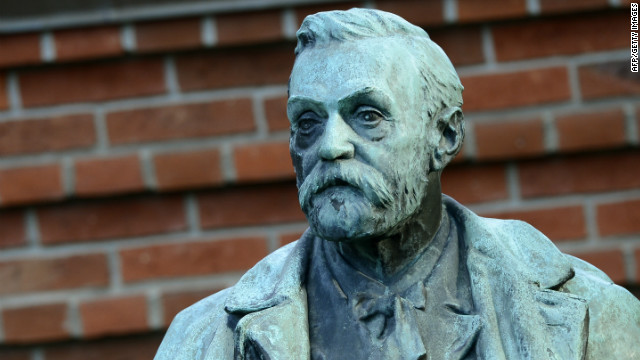
- The Nobel Prize in Physics will be announced Tuesday in Stockholm, Sweden
- The prize for physics has been awarded 105 times since 1901
- The prize money sum dropped 20% since last year
(CNN) -- The Nobel Prize in Physics will be announced Tuesday in Stockholm, Sweden -- the second of six Nobel prizes to be announced this month.
Last year, three scientists shared the physics prize for the discovery that the universe is apparently expanding at an accelerating rate some 14 billion years after the Big Bang and not slowing to a static state nor preparing to contract.
The laureates were Saul Perlmutter from Lawrence Berkeley National Laboratory and the University of California, Berkeley; Brian P. Schmidt of Australian National University, and Adam G. Riess of Johns Hopkins University and the Space Telescope Science Institute.

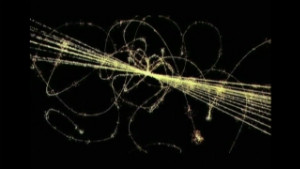 Scientists confirm 'God Particle' exists
  Exploring the Expanding the Universe
  Cell discovery earns Nobel Prize
 This year, the foundation lowered the monetary award that accompanies the Nobel Prize by 20% from 10 million Swedish kronor ($1.5 million) to 8 million kronor ($1.2 million) because of the turbulence that has hit financial markets.
On Monday, the Nobel Assembly awarded the prize for Physiology or Medicine to Sir John B. Gurdon and Shinya Yamanaka jointly for their discovery that stem cells can be made of mature cells and need not necessarily be taken from fetuses or embryos.
In the coming days, the committee also will announce prizes in chemistry, literature, peace and economics.
Since 1901, the committee has handed out the Nobel Prize in Physics 105 times to 192 individuals. The youngest recipient was Lawrence Bragg, who won in 1915 at the age of 25. Bragg is not only the youngest physics laureate, he is also the youngest Nobel laureate in any Nobel prize area.
The oldest physics laureate was Raymond Davis Jr., who was 88 years old when he was awarded the prize in 2002.
John Bardeen was the only physicist to receive the prize twice -- for work in semiconductors and superconductivity.

